

OUR PURPOSE
Since 2012, Home State Health has provided quality, affordable, government-sponsored managed care services to communities throughout the state of Missouri. Home State Health has more than 350 employees across the state who are dedicated to serving our 360,000+ Medicaid members. In 2023, the state chose Home State Health to be the sole provider of Missouri’s foster care population, known as Show Me Healthy Kids. As we continue to grow, our devotion to our members and our mission remains the same: transforming the health of the communities we serve, one person at a time—bringing to life the value of managed care through better access, coordination, and outcomes.
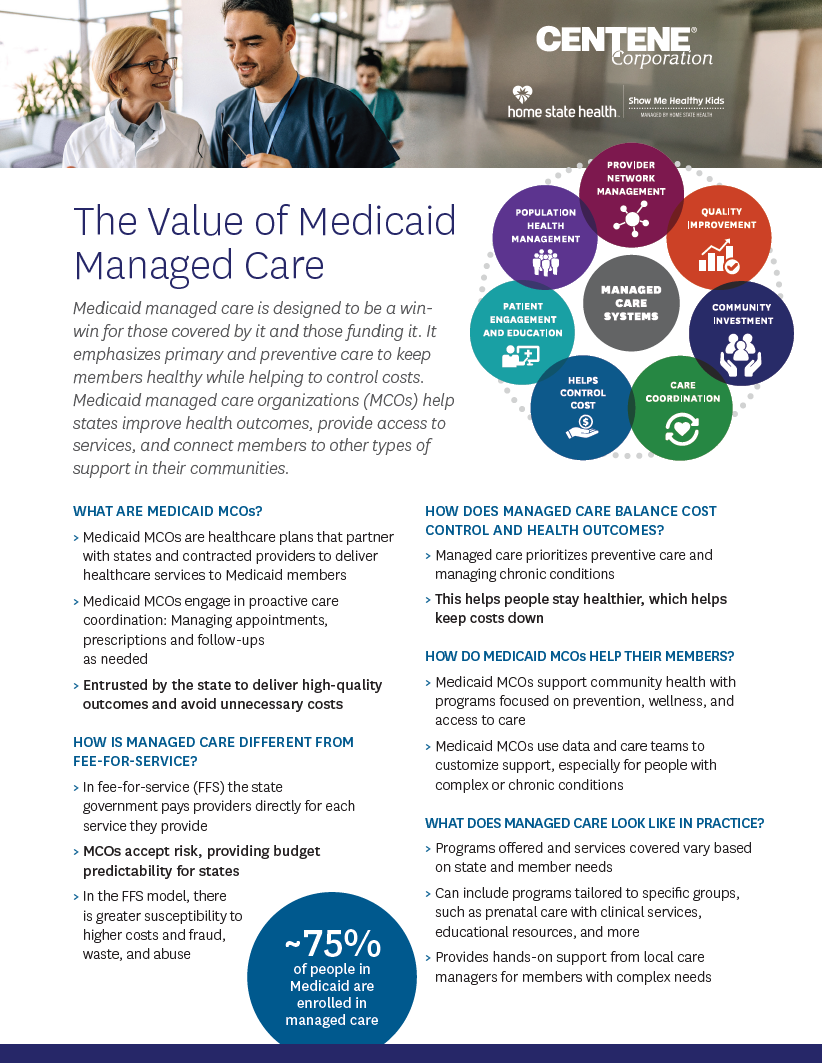
Our programs focus on mental, behavioral, and physical health and wellness to provide members with access to the personalized care they need. As part of Centene Corporation, our experienced team members know there is no one-size-fits-all approach to treatment, which is why we are committed to providing individualized programs and care plans to our members—an approach that reflects the principles highlighted in Centene’s “Value of Managed Care.”
Community Impact:
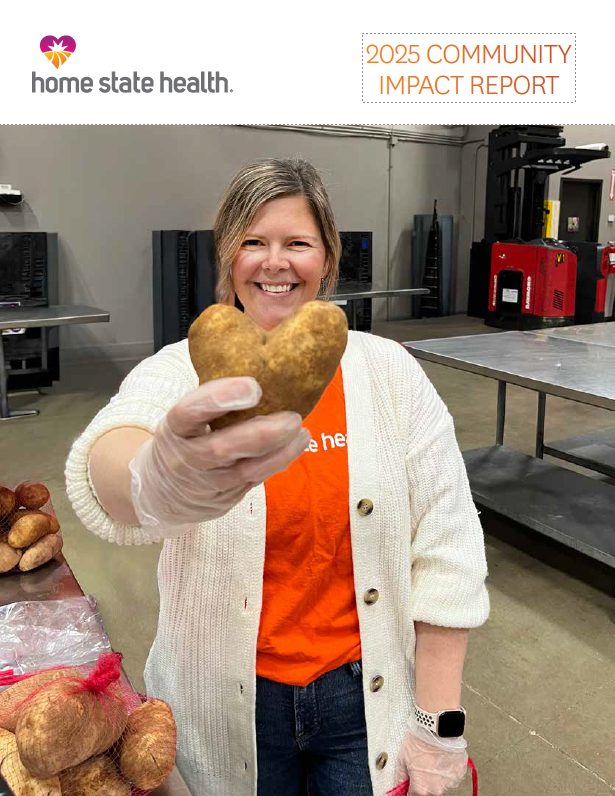
Home State Health maintains a strong presence in communities across Missouri by investing in local partnerships and supporting initiatives that promote health, stability, and well-being. Through sponsorships, grants, and collaborative programming, Home State Health works alongside community-based organizations, providers, and local stakeholders to address community-identified needs and advance shared goals. These efforts support education, prevention, and access to services while strengthening local capacity and fostering sustainable, community-driven solutions throughout the state.
Home State Health and Centene support community-based organizations across Missouri through targeted grant funding that advances health equity and addresses social drivers such as food access, housing stability, and behavioral health. These investments help local partners deliver meaningful, sustainable improvements in community health.
Following are some of the recent recipients of our grant funding:
- Behind It All Foundation
- Bridge of Hope Ministries
- Casa de Salud
- Central Missouri Community Action
- Central Missouri Foster Care & Adoption Association
- Children's Mercy
- Feeding Missouri
- FosterAdopt Connect
- Girls In The Know
- Impact Support Services
- Jefferson Franklin Community Action Corporation
- Jordan Valley Health
- Literacy KC
- Marion C Early School District
- Missouri Coalition of Diaper Banks
- North Central Missouri Mental Health Center
- North Star Advocacy
- Npower Inc
- Ozarks Community Health Center
- Phelps Health
- reStart Inc.
- Saving KidSight
- SITE KC
- Special Learning Center
- St. Louis Science Center Foundation
- The Key Youth Inc
- University of Missouri Extension
- Urban Community Connection
Strong partnerships are essential to improving the health and well-being of the communities we serve. Home State Health works closely with state and local agencies, healthcare providers, child welfare organizations, schools, community-based organizations, and advocacy groups to address health equity and the social drivers of health. Through collaboration, data sharing, and coordinated care efforts, we help connect members and families to medical services, behavioral health support, and community resources such as housing, food access, and transportation. By aligning with trusted community partners and policymakers, we aim to strengthen systems of care, support children and families in the foster care program, and create sustainable, positive impact across the communities we serve.
Home State Health is committed to strengthening Missouri’s behavioral health system by expanding access to high-quality, person-centered mental health and substance use services across the state. Through collaboration with providers, community-based organizations, and state agencies, Home State Health supports early intervention, care coordination, and integrated behavioral and physical health services that meet members where they are. Our approach prioritizes prevention, timely access to care, and recovery-oriented supports, with a focus on reducing disparities, addressing social drivers of health, and improving long-term outcomes for individuals, families, and communities throughout Missouri.
Home State Health works to improve health equity by helping reduce barriers to care and supporting fair access to services for people across Missouri. By listening to communities, using data to better understand needs, and partnering with local organizations, we focus on closing gaps in care and addressing differences in health outcomes. This work helps ensure individuals and families—especially those who have been historically underserved—have the opportunity to achieve better health.
Foster Care:
Show Me Healthy Kids is Missouri’s foster care managed care program and the sole source of comprehensive health coverage for children and youth in foster care. Administered by Home State Health in partnership with the state, the program is designed to meet the complex medical, behavioral health, and developmental needs of this population. Show Me Healthy Kids emphasizes trauma-informed care, care coordination, and collaboration with child welfare agencies, providers, caregivers, and community partners to promote stability, continuity of care, and improved health outcomes for children and youth as they move through the foster care system.
Learn more about how Centene's foster care initiatives support children and families through coordinated, community-based care.
Show Me Healthy Kids expanded its partnership with Jordan Valley Community Health Center to support the Foster Care Center of Excellence, a streamlined “one-stop shop” designed to help children and youth in foster care—and the families and partners who support them—more easily access care. The center brings together behavioral health, primary care, vision, and dental services in one location, improving coordination and reducing barriers to care. This effort is part of a broader statewide initiative focused on increasing access to services, strengthening care coordination, and supporting long-term wellness for children in foster care.
Interactive online trainings are available to foster parents, caregivers, and other foster care stakeholders as a community service. These live, facilitator-led sessions cover topics such as post-adoption support, trauma, behavioral challenges, self-care, bullying, and child abuse and neglect.
The trainings are designed to build knowledge, strengthen caregiver support, and promote positive outcomes for children and families involved in foster care.
Show Me Healthy Kids families have access to virtual caregiver support groups through the Association for Training on Trauma and Attachment in Children (ATTACh). These trauma-informed groups support foster, adoptive, and kinship caregivers who are parenting children with trauma or attachment-related challenges. Meetings are held twice each month and are led by experienced foster and adoptive parents trained in trauma and attachment. The virtual format allows caregivers to participate from any location while building connection, sharing experiences, and gaining practical support.
Social Determinants of Health (SDoH):
Home State Health addresses social determinants of health by partnering with community organizations, providers, and local agencies to connect members to resources that support health beyond clinical care. Recognizing that factors such as housing stability, food security, transportation, education, and safety significantly influence health outcomes, Home State Health integrates screening, referrals, and community-based supports into care delivery. This collaborative, data-informed approach helps reduce barriers to care, advance health equity, and support improved outcomes for individuals and families across Missouri.
In 2026, Home State Health will expand its commitment to addressing Social Determinants of Health through a statewide community grant program focused on Food Insecurity and Housing. These priorities reflect the most pressing needs impacting health outcomes across Missouri, particularly in rural and underserved communities. Through targeted investments in trusted, community based organizations, the program will support initiatives that increase access to nutritious food, strengthen housing stability, and reduce barriers that prevent individuals and families from achieving better health and well being.
Ongoing Social Determinants of Health initiatives include:
Food Insecurity
Home State Health and Show Me Healthy Kids partnered with MU Extension to launch a two-year nutrition education program designed to make healthy eating more accessible for members and families. The program offers a series of six interactive cooking and nutrition classes, available both online and in person, with a focus on practical menu planning using WIC-approved foods. This partnership helps expand access to nutrition education and supports pregnant members and families by addressing gaps that contribute to food insecurity and health disparities.
Home State Health partners with Feeding Missouri to help combat childhood hunger across Missouri through the Hunger for Learning initiative. This partnership supports weekend food programs—such as backpack programs and school‑based pantries—that provide consistent access to nutritious food for students and their families when school meals are unavailable.
Through Feeding Missouri’s statewide network of six regional food banks, the initiative reaches rural and underserved communities across the state, helping reduce food insecurity while supporting children’s health, well‑being, and readiness to learn. By strengthening local food access and coordinating with schools and community partners, this collaboration addresses a critical social determinant of health that impacts both academic success and long‑term health outcomes.
Home State Health partners with Hy‑Vee to bring Green To Go produce distribution events to local community partners, helping increase access to fresh, nutritious food across Missouri. Through this partnership, Home State Health sponsors 5,000 pieces of fresh produce, which Hy‑Vee delivers for distribution at community‑based events at no cost to individuals and families or our partners.
Green To Go events are designed to reduce barriers to healthy eating while also connecting community members to nutrition education and local health resources. By bringing fresh food directly into neighborhoods and pairing distribution with community outreach, this partnership supports healthier food access and advances Home State Health’s commitment to addressing food insecurity as a key social determinant of health.
Housing
Home State Health has partnered with Central Missouri Community Action (CMCA) to support the development of Providence Landing, an affordable housing community in Columbia. This community grant is helping fund land preparation and construction for single‑family attached housing units designed to increase access to safe, stable, and affordable homes.
Providence Landing is being developed across seven vacant lots located between Providence Road and North 4th Street and is projected to include 14 single‑family living units in a mix of one‑, two‑, and three‑bedroom configurations. The community is intentionally located within walking distance of grocery stores, medical facilities, public transportation, employment opportunities, and parks, helping reduce barriers that contribute to housing instability.
In addition to construction, CMCA provides ongoing supportive services for homebuyers—including employment support, housing stability services, and financial education—to promote long‑term economic and housing stability. By investing in affordable housing and wraparound supports, this collaboration advances Home State Health’s commitment to addressing housing as a critical social determinant of health.
2025 HIGHLIGHTS
.png)
.png)
.png)
.png)
.png)
.png)
- Ambetter Health Solutions and Marathon Health Expand Access to Primary Care for Members in Indiana and Missouri
- Home State Health Recognizes Dr. Daniel G. Rudolph and Dr. Joshua P. Boldt of Kidz Biz Pediatrics with Clinical Quality Champion Award
- Home State Health and Centene Foundation Award $750,000 to Missouri Organizations Advancing Community Health
- Home State Health, Centene Foundation Announce $750,000 Grant Opportunity for Missouri Organizations Improving Health Outcomes
- Home State Health and Centene Foundation Launch Medical Respite Program in St. Louis
- Home State Health Launches First Foster Care Center of Excellence in Partnership with Jordan Valley Community Health Center