

Checkups allow a doctor to look at your child from head to toe. The first few check-ups are very important to make sure your baby is growing, feeding, and developing properly. If your baby hasn’t seen the doctor since discharge from the hospital, set up an appointment ASAP! A visit should be scheduled for all new members within 60 days, following visits should be scheduled based on the recommended guidelines.
NAVIGATE BY SECTION: |
- 3 - 5 days
- 1 month
- 2 months
- 4 months
- 6 months
- 9 months
- 12 months
- 15 months
- 18 months
- 24 months
- 30 months
Each Exam Should Consist Of:
- Full Physical Exam (length, height, weight, blood pressure and BMI %)
- Health History (initial and interval)
- Recommended Screens (catch up on missed or late recommended screens)
- Immunization/shots (catch up on missed or late immunizations/shots)
- Referrals as needed
During each visit the following recommended screens should take place:
| Recommended Screenings: | Recommended Age(s) of Child: |
|---|---|
| Behavioral Health Screen | Behavioral Assessment to be performed at each visit between 0 to 30 months. |
| Hearing Screen | All newborns should be screened during their first visit. Follow up or referrals should be conducted based on results. |
| Dental Screen | A dental screen should be completed by the 12-month exam and every 6 months after the first visit until 21 years. |
| Lead Screen | A lead screen is required at 12 and 24 months. Children between 36-72 months must be tested if they have not been tested during the recommended time period. |
| Autism Screen | An Autism Screen is required at 18 and 24 months. Catch up screens can be completed during your 30-month visit. |
| Developmental Screen | A developmental screen is required at 9, 18 and 30 months. Developmental screens help to identify potential delays in growth and development. |
| Anemia Screen | Should be performed at 12 months. Assessment for risk factors should continue at each visit. |
*For more information speak with your provider.
Babies and young children have not had time to develop a strong immune system, making them more vulnerable to infections. Immunizations can help prevent the spread of disease and protect infants and toddlers against dangerous complications. Below are the recommended immunizations based on age.
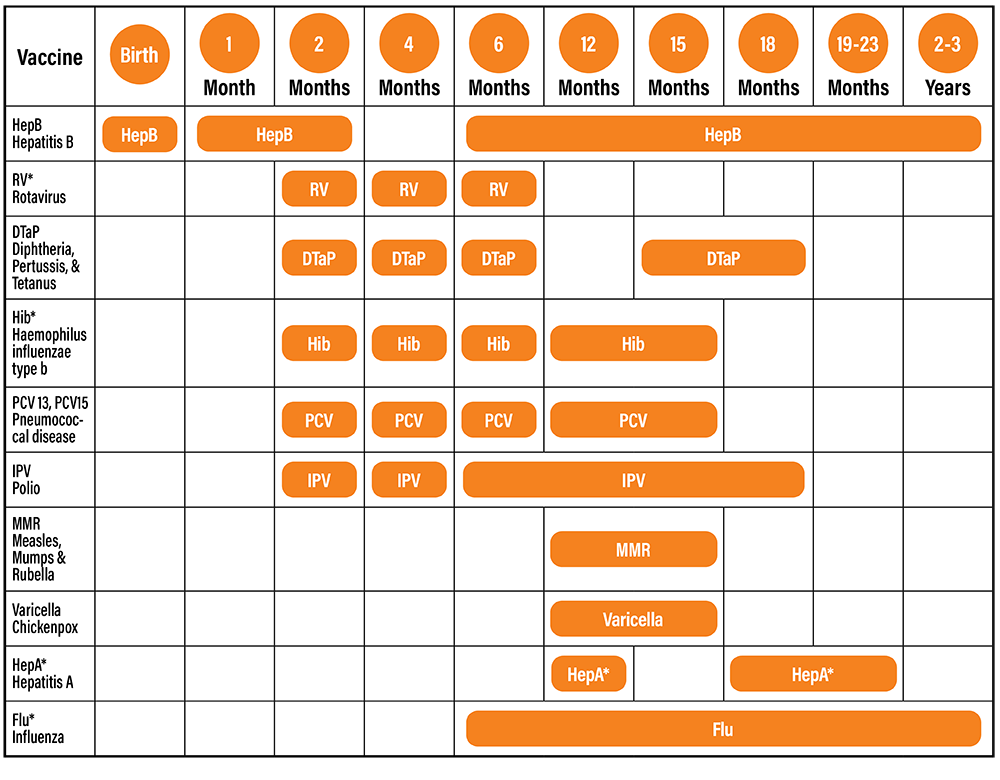
Source: CDC Vaccine Schedules
Members Can Earn My Health Pays® Visa Reward for Completing Your Infant Well Child Visits
Eligible members can earn a My Health Pays® Visa reward* for completing all six infant well child visits with your assigned primary care provider at 2, 4, 6, 9, 12, and 15-months. Dollar rewards are loaded on your My Health Pays® Visa Reward card as members complete healthy activities such as an annual wellness visit.
*Your My Health Pays reward dollars are added to your rewards card after we process the claim for each activity you complete.

Teething:
Most first teeth erupt by 6 months of age. Your baby might be teething already. Some common signs for teething are:
- Drooling (can last for weeks before a tooth appears)
- Irritability
- Pulling on ears or rubbing cheeks.
If your baby does not have teeth yet, you still need to clean your baby’s mouth after every feeding. If your baby is getting some teeth now, its ok to use small amounts of toothpaste without fluoride. Fluoride should not be used on babies under 6-7 months old.
HSH27024 SMHK27020; 8/5/2026