

Teens and young adults between the age of 14 and 20 years old should visit their doctor once a year to monitor their overall health and development. During these yearly visits, the doctor may ask parents/guardians to leave the room when completing the physical exam. This gives your teen the opportunity to develop a relationship with their doctor. This also gives the teen and the doctor the privacy to ask and answer questions. The doctor will pay close attention to behaviors and emotions to address issues related to depression, tobacco, alcohol or drugs, violence, and/or eating disorders. Attending these routine visit helps to encourage your teen to develop healthy behaviors. This will also reduce or prevent unhealthy behaviors.

NAVIGATE BY SECTION: |
- 14 Years Old
- 15 Years Old
- 16 Years Old
- 17 Years Old
- 18 Years Old
- 19 Years Old
- 20 Years Old
Each Exam Should Consist Of:
- Full Physical Exam (length, height, weight, blood pressure and BMI %)
- Health History (initial and interval)
- Recommended Screens (catch up on missed or late recommended screens)
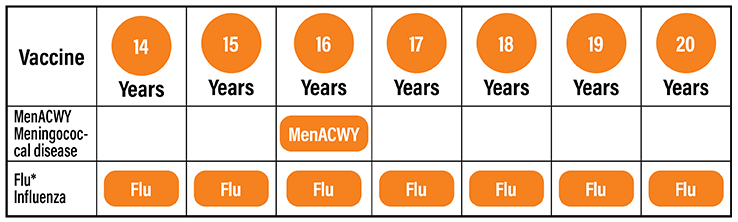
- Immunization/shots (catch up on missed or late immunizations/shots)
- Referrals as needed
Teen Athlete Guide: Stay Healthy and Play Your Best
If you play sports, a checkup can help you stay safe, avoid injuries, and get stronger. It’s more than just getting a form signed.
A doctor visit is like a coach for your health. They help you learn what your body needs and fix small problems before they turn into big ones.
- Sports Physical vs. Checkup
- Sports physical: A quick check to see if it’s safe to play.
- Checkup: A full visit about your whole health (sleep, food, mood, growth).
- Year-round care: Visits during the year to help you stay healthy, train safely, and heal well.
- Skills vs. Health (You Need Both)
- Skills: Speed, strength, stamina, and focus.
- Health: Sleep, food, mood, recovery, and staying injury-free. If your health is off, your skills often drop too.
- Learn what your body needs
- Your health story: Past injuries, asthma, concussions, medicines, and family health problems.
- Find problems early: Low iron, breathing trouble, too much training, not enough sleep, or stress.
- Make a simple plan: Warm up, drink water, eat good food, sleep, and rest when you need to.
- Train smart: Don’t do too much too fast.
- Train your mind: Learn ways to stay calm, focused, and confident.
- Come back safely: After an injury (or concussion), return to school, practice, and games step by step.
- Get small check-ins: Little problems are easier to fix than big ones.
These checks can help you miss fewer practices and games.
- Control health problems: If you have asthma, allergies, migraines, ADHD, or diabetes, a plan can help you stay safe while you play.
- Watch for growth spurts: Growing fast can change how you move and can raise your chance of getting hurt.
- Stay up to date: Ask about shots, vision and hearing checks, and any tests you might need.
- “Can we talk about my sleep, food, and water?”
- “Do I have a higher chance of getting hurt because of past injuries or a growth spurt?”
- “What should I do if I get dizzy, can’t breathe well, or have chest pain?”
- “Do I need shots, vision checks, or any tests?”
- “Can you help if stress or worry is hurting school or sports?”
Bottom line: A sports physical is a quick safety check. A checkup (and visits during the year) helps you stay healthy, avoid injuries, and keep getting better.
Each visit should include the following recommended screenings.
| Recommended Screenings | Recommended Age(s) of Child |
|---|---|
| Behavioral Health Screen | Assessment to be performed at 14, 15, 16, 17, 18, 19 and 20 |
| Dental Screen | An oral screening must be performed at each EPSDT well-child visit. Children should also visit their dentist every 6 months for a dental checkup. |
| Vision Screen | A vision screening will take place at 15 years old. |
| Hearing Screen | Hearing screenings should be performed at one visit between the ages of 11 years and 14 years, one visit between the ages of 15 through 17 years, and one visit between the ages 18 through 21 years. The doctor will also check hearing any other time there is a concern. |
| Tobacco, Alcohol, Drug and Depression, Assessment | For teens 14 through 20 years of age, a tobacco, alcohol, drug, and depression use risk assessment is completed at each visit to identify risks. |
| HIV / STI Screen | Adolescents should be screened for HIV once between the ages of 15 and 18, making every effort to maintain confidentiality. |
Looking Ahead:
Teaching teens and young adults how to prepare for their doctor's visits will help them take control of their health care. Teens and young adults can assist with scheduling appointments, filling out medical forms, and should become knowledgeable about any medical conditions they may have.
HSH27024 SMHK27020; 8/5/2026