

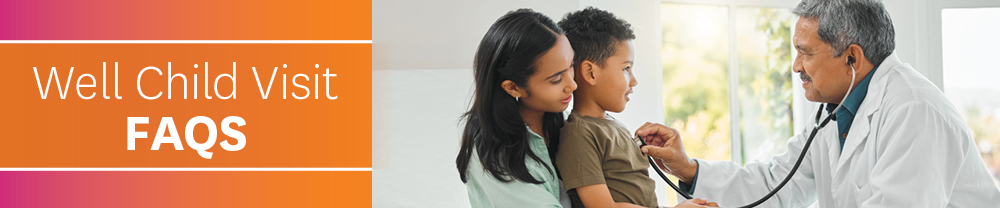
Well child visits are an essential part of a child’s health, attending routine visits can help to monitor your child’s overall health and development. Well child visits should be performed from birth to 20 years old under the EPSDT benefit.
Yes! Yearly visits help you stay healthy. Even if you feel great, your doctor can find small problems early and answer your health questions.
Check-ups are no cost for Home State Health Plan/Show Me Healthy Kids members.
We offer no-cost rides to and from your visit. Call us or go online to learn more.
We’ll help you find a doctor near you or book an online visit. Call us at 1-855-694-HOME (4663). Or visit our Find a Provider tool.
No problem! You can change your doctor anytime through your secure account. Use our Find A Provider tool to see available doctors.
We’ll help you find a doctor who is taking new patients and meets your needs.
| Anemia Screen | An anemia screen is a brief blood test done to identify those who have or are at risk of developing an iron deficiency. |
| Autism Screen | An autism screen is done to identify early and manage potential developmental and behavioral challenges. There are many tools to assess autism in children, speak with your provider to decide upon the best option for your child. |
| Behavioral Health Screen | A behavioral health screen is done to identify and manage mental health conditions. Early detection is important in preventing some of the long-term effects associated with a childhood mental disorder. |
| Dental Screen | During regular well-child visits, the pediatrician will complete an oral screening to check your child’s teeth, gums and apply fluoride varnish. In addition to the oral screening, it is recommended that children visit their dentist every 6 months for a dental checkup. |
| Developmental Screen | A developmental screen is done to take a closer look at how your child is developing. Developmental screens can come in the form of a brief test or questionnaire. |
| Hearing Screen | A hearing screen is done to identify early and manage hearing loss. Hearing screens for children can take place in several settings such as school, community, home, or medical settings. |
| HIV / STI Screen | The pediatrician completes an HIV/STI (Human Immunodeficiency Virus / Sexually Transmitted Infection) screen by getting a sexual history to determine if there is a risk for HIV/STI. The pediatrician may offer testing if an increased risk is identified. |
| Lead Screen | A blood test is given to check to see if a child had exposure to lead. If lead level is high, follow up is recommended that may include additional testing and treatment to remove lead from the body. |
| Tobacco, Alcohol, or Drug Use and Depression Risk Assessment | Tobacco, Alcohol, Drug Use and Depression are identified through a self-administered questionnaire or interview given by the pediatrician. After the screening the pediatrician will address any risk and offer health education. |
| Vision Screen | A vision screening is a brief eye and vision check to help identify vision issues. Some screenings may be performed by asking your child to read or match images in an age-appropriate way, others may use special tools. |
HSH27024 SMHK27020; 8/5/2026